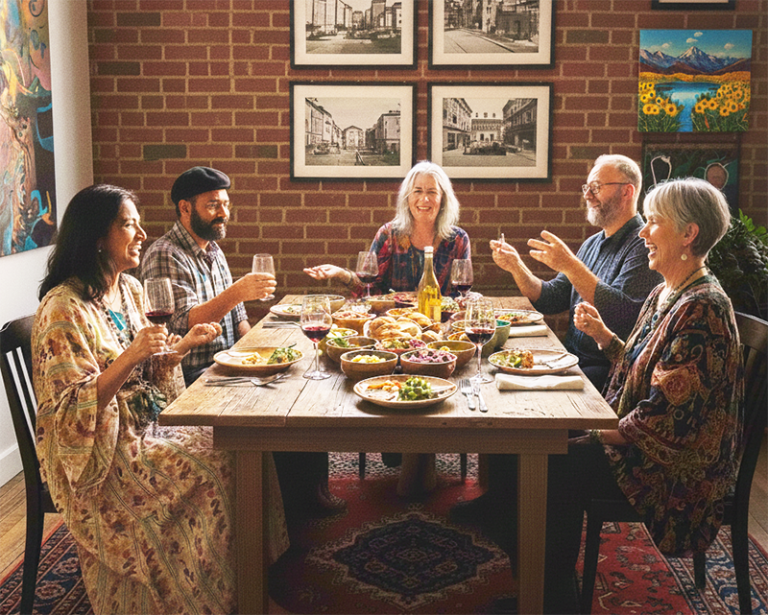
–and invited a mix of spiritual, political, artistic, and scientific friends what would happen if you asked all of them to define enlightenment?
At my imagined dinner party there would be a moment of silence. Then some might pull out their phones, scrolling for ways to discreetly leave. Others would quietly gasp and refill their wine glasses. A few would jump right in, thrilled at the chance to have this conversation. This would encourage at least one person to bash the latest guru arrested for sexual abuse and fraud. As the conversation kicked up a few would carefully keep their private spiritual practices and beliefs private. Why? Because they’ve been mocked enough to know that spiritual things are better left unsaid.
Enlightenment carries a lot of baggage.
For some people, it’s religious and off-putting. For others, it’s mythical, mystical and vague. It seems unrealistic, elitist, or just not relevant to them. And for many sincere practitioners, it feels like an unsafe topic of conversation.
So let’s jump right in!
Higher states of consciousness are described in most cultures and belief systems—religious, spiritual, secular, philosophical, atheistic. Terms and descriptions vary. Why is this relevant to us? Why are we having this conversation? Because—
There is a set of problems we all have that enlightenment by any name addresses.
Most of us worry constantly about things we can’t control. Whatever we gain or achieve doesn’t last. We obsess over the past and hope all will be resolved in the future. We feel chronically incomplete and dissatisfied. And even when everything is going well, we have the uneasy feeling it won’t last. And it rarely does.
No matter what we may believe in or not, we share this response to the uncertainties of life. Except for a few people who have achieved some kind of internal bypass. They are content, at peace, aware – no matter what. And that’s just what is obvious from the outside. What’s happening on the inside?
This is where all the different cultures and traditions converge. Higher consciousness by any name involves seeing through a deeply ingrained assumption:
“I am a mind inside a body, trying to survive in an uncertain, threatening world. Sooner or later — it will get me.”
That assumption feels obvious. It feels like common sense. It’s real. It also turns out to be… questionable.
As people awaken—whether they’re Buddhists, yogis, Christian contemplatives, Zen practitioners, or secular meditators—they report the same shift. The sense of self is more expansive and less defined by opinions, emotions, and personal narrative. Self is more about awareness than what used to shape it. Awareness is shared and subtly unifies us. We extend beyond our individual body and mind. We feel for others with heightened compassion and shared humanity. This expansion can go beyond any limits we put on ourselves.
The process is gradual and there are many practices that support it. Some are secular, others religious or spiritual, and most are focused on gaining a truthful, direct knowledge of whatever is beyond the narrow confines of ego. Who am I beyond this mind and body? It’s about insightful awareness into what is usually masked by the ever changing and enticing world that constantly holds our attention.
Disengaging from that and finding what’s lasting, true and hiding in plain sight is the challenge addressed by many practices, teachings, and teachers.
The dinner conversation has advanced this far because the closet meditators have outted themselves and are sharing what they know. And it turns out, they know a great deal. The phone scrollers have been our best researchers. One just discovered that Buddha said there are 84,000 Dharma Doors; to where? he asks.
Our second researcher responds, reading right off this very website. “All doors open for doubters as well as the devout. Paths and practices connect and diverge because everyone ultimately charts their own, shaped by preferences and experiences. The best teachers know this and offer practices that are flexible and adaptable to individuals. The best path is the one that works for you.”
The point of entry can be anything: a book, a conversation, a social media post, a question. It can be a longing and something that responds. It can be a friendly suggestion or a song that resonates deeply.
By now everyone is chiming in with some form of mindfulness, chanting, therapy, service work, ecstatic dance, workshop, retreat, cruise, or conference they’ve tried, heard about, or want to check out.
I get a chance to make my final point. There are countless ways to pursue enlightenment for one single reason. It’s a natural part of human development, perhaps the highest part. No matter what you believe or don’t believe we all have the capacity to achieve awareness beyond ego and the boundaries we think define us.
But wait! My guests protest. They don’t want to give up anything. And that includes sex, wine, arguing, or their egos. And what about all this bliss stuff? It’s just bs. Right? And what about all these corrupt gurus?
It turns out this dinner party could go on a lot longer. Please stay with us.